
Adapted material you do not redo every evening
People working on inclusion spend more time rewriting than teaching: the same page simplified for one student, broken into steps for another, rewritten with concrete examples for a third. Minerva does that work upstream. The teacher sets once what each student needs, and from then on every explanation, test and exercise comes out already adapted.
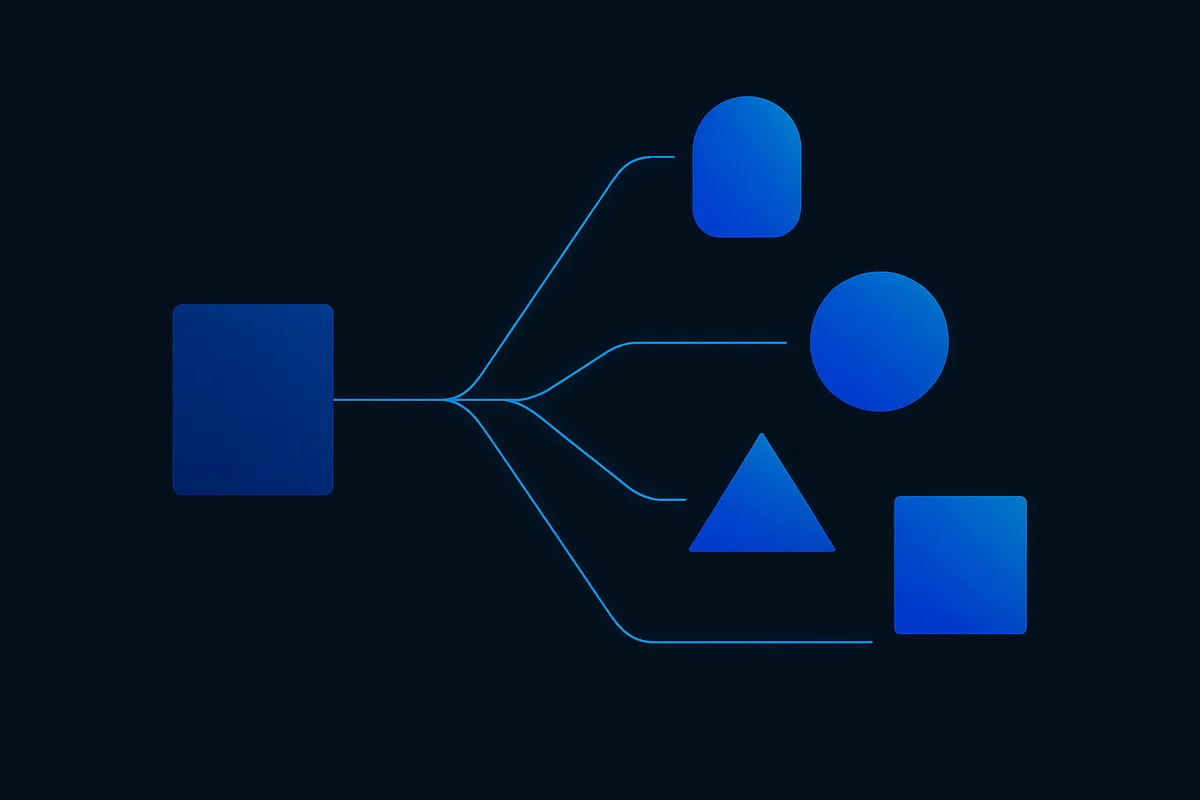
It is not an on/off switch. What a student with reading difficulties needs, less text to get through, is not what a cognitive disability needs, where simplifying the concepts is what counts, and neither is what an attention disorder needs, where the work has to be broken into short steps. A single switch would give everyone a mediocre compromise.
Two students, two different answers
Next to this, the very same question asked with two different configurations. The topic does not change: how it is said does.
The first student gets short sentences, one piece of information at a time, no dense text. The second gets a concrete example first and the definition after, with a check question to see whether the thread held.
It is the work a support teacher does by hand, in the evening, for every subject and every student.
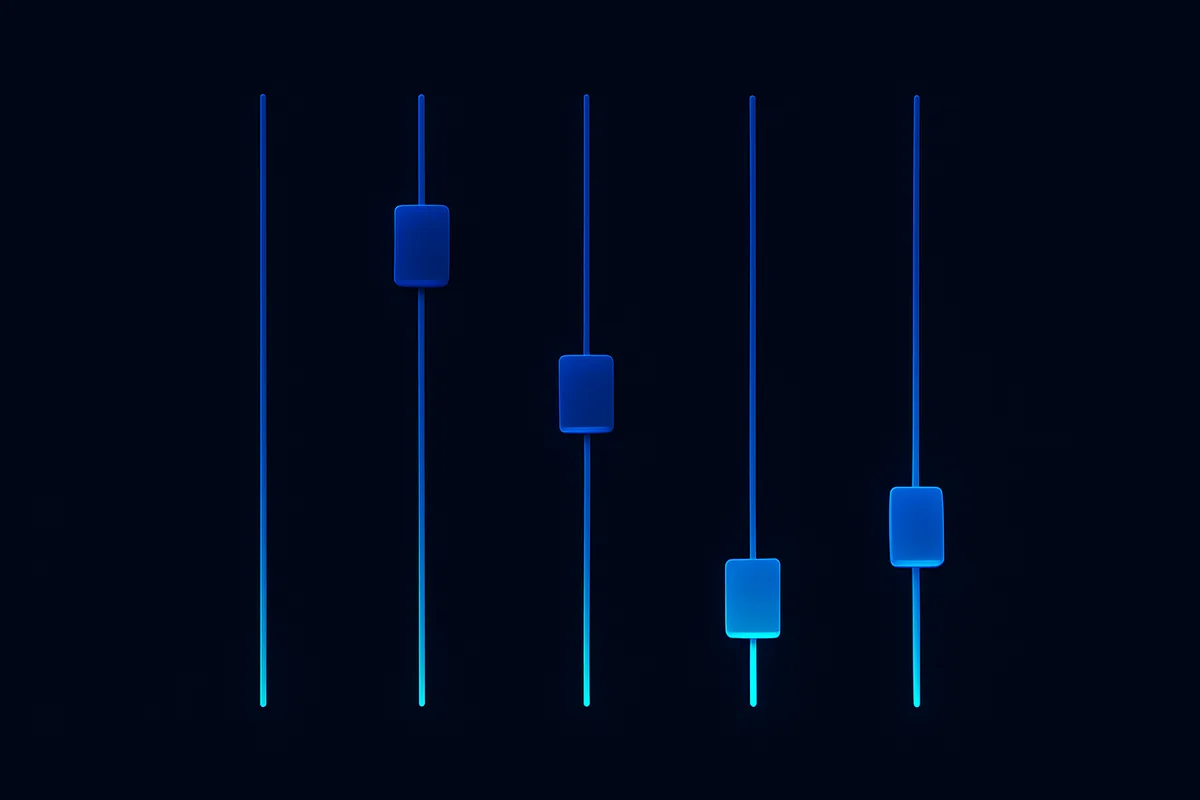
Five levers, one at a time, with three intensities
Every lever turns on separately and is graded: the same "simplification" for a 15-year-old and for a student with a moderate cognitive disability is not the same thing, and treating them alike is the fastest way to serve neither.
Simple language
Common words instead of jargon, and any necessary term explained the first time it appears.
High readability
Short sentences, one piece of information each, no dense text. Length thresholds follow European easy-to-read guidelines.
Guided steps
One step at a time, moving on only when the previous one is settled.
Concrete examples
Every concept anchored to something experienced, before the abstract definition.
Comprehension checks
Check questions along the explanation, not only at the end, to see where the thread was lost.
Alongside the five levers there is story mode, and it is not a gimmick: the same content becomes a tale, with consistent characters and setting and the concept restated plainly at the end. You choose the style, and it works on tests too, with the questions set inside the story. For some students it is the road that opens a topic when every other one has closed.
Profiles start from the need, not from the diagnosis
So nobody configures five levers from scratch there are ready starting points: reading difficulty, attention, comprehension, literal interpretation, calculation. You pick the closest one and correct what does not fit. A profile is a starting point, not a cage, and the teacher stays in charge.
Naming them by need follows the Universal Design for Learning framework, which organises support around variability of functioning rather than categories of disability. Two students with the same diagnosis have different needs, and the same reading difficulty shows up in dyslexia, in ADHD and in a student who is not a native speaker.
Why telling students to use ChatGPT is not enough
A general-purpose assistant explains well, and nobody argues otherwise. On an inclusion path, though, three things are missing, and they are not features: they are how the tool is conceived.
The teacher sets it, not the student
On a general-purpose assistant the adaptation depends on whoever types "explain it in short sentences", every time. That asks the student to do precisely the thing they cannot. Here the teacher decides once, and it always applies.
No need to put it in the student's hands
The teacher uses it to prepare: adapted explanations, tests, diagrams and charts to bring into class. The student opens no account, uses no AI and enters nowhere. If later it makes sense for them to work with it too, the adaptation is already set and they do not have to ask for it.
No personal accounts, no health data
No diagnosis enters the system, and there is no need to make minors open an account on a general-purpose service. One supplier, one contract, one invoice.
The evening rewriting stops
The difference is not one more answer: it is not rewriting the same material by hand for the third student, at ten in the evening, unpaid.
No diagnosis ever enters the system
A diagnosis is health data under article 9 of the GDPR, about a minor, that would end up inside somebody else's account. Minerva stores none: all that is kept per student is the set of adaptations the teacher chose, that is which levers are on and at what intensity.
It is a design decision taken before any code was written, and it removes the question that usually stalls the adoption of a digital tool in inclusion work.
How it works in practice
Through a questionnaire by area, or by picking a profile and adjusting it. A preview shows straight away how the result will change, before you save.
A support teacher follows several students: settings are many and you switch between them without redoing anything.
Explanations, marked tests, maps and diagrams, exercises. Nobody has to ask for a simpler version every time.
Syllabus, handouts and notes uploaded once are used in the answers: the adaptation applies to what is actually being studied, not to a generic topic pulled off the internet.
With independent verification on, a second pass reviews accuracy and coherence before the material goes into class. Simplifying must not mean being inaccurate, and on adapted content inaccuracy is harder to spot: which is why it is worth leaving on for a support configuration.
Two ways to start
You do not need a school-wide decision to form an opinion: the first step can be taken by one teacher, today.
Are you a teacher who wants to try it?
You do not have to ask anyone. Sign up free, configure one student, and in ten minutes you will know whether it helps. Inclusive mode is not reserved for paid plans: on a free account credits are few and maximum depth is reduced, and that is enough to judge.
Try it now, freeDo you want to bring it into the school?
We set up a trial period for the school, with the teachers you choose, no commitment and nothing to approve in advance. It is the step after, not the first one: it works better once a teacher has seen it work in class.
Request a school trialSchool trial request
Rather talk it through first? Write to info@dialogicom.com or call +39 393 970 4093. If you are looking for the study tool instead, this is the page.