
Merlino Board
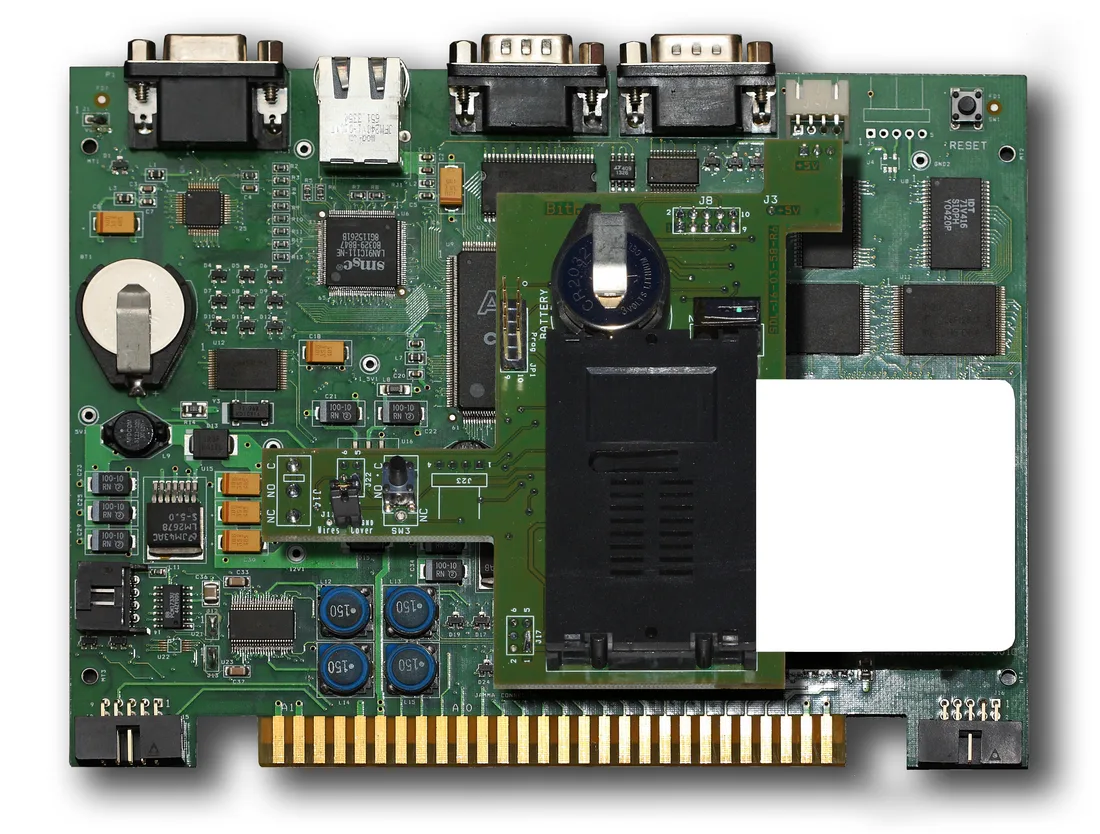
An embedded development platform for regulated gaming machines. Hardware based on an FPGA with a softcore processor, a smart card device for data security, and a multitasking operating system that took on compliance with the gaming authority's technical rules, leaving the developer just one thing to do: the game. A project by Dialogicom's founder, Salvo De Luca.
The only limit to its applications is your imagination.
A dev kit that hid the complexity.
Developing a regulated gaming machine means complying with a decree: game counters, play history, events, maintenance interventions, parameters set by the regulator. Sensitive matter, where a mistake is not just a bug but a compliance problem.
The Merlino Board was built to lift that weight off whoever develops the game. A complete dev kit, designed to reduce hardware and regulatory complexity, so developers could focus only on the application.
An operating system that thought about the rules.
Built on a multitasking operating system, the platform took care of everything the decree required, transparently to the user application.
- Game accountingStorage of counters, play history, events and maintenance interventions, as required by regulation.
- Smart cardAll information was synced to the smart-card device: secure, tamper-resistant storage of sensitive data.
- Remote systemA sentinel process always listening for queries from the remote system, to respond promptly or update game parameters, including responsible-gaming messages.
- TransparencyThe core of the platform was managed in multitasking by the operating system: the client's application stayed an independent task.
All the logic in one FPGA. Processor included.
The Merlino integrated its entire logic in VHDL inside an Altera FPGA (Cyclone), processor included: a Nios II soft-core CPU synthesized on the same device. An approach that even allowed custom instructions to be defined for the processor, transcending the limits of traditional embedded architectures.
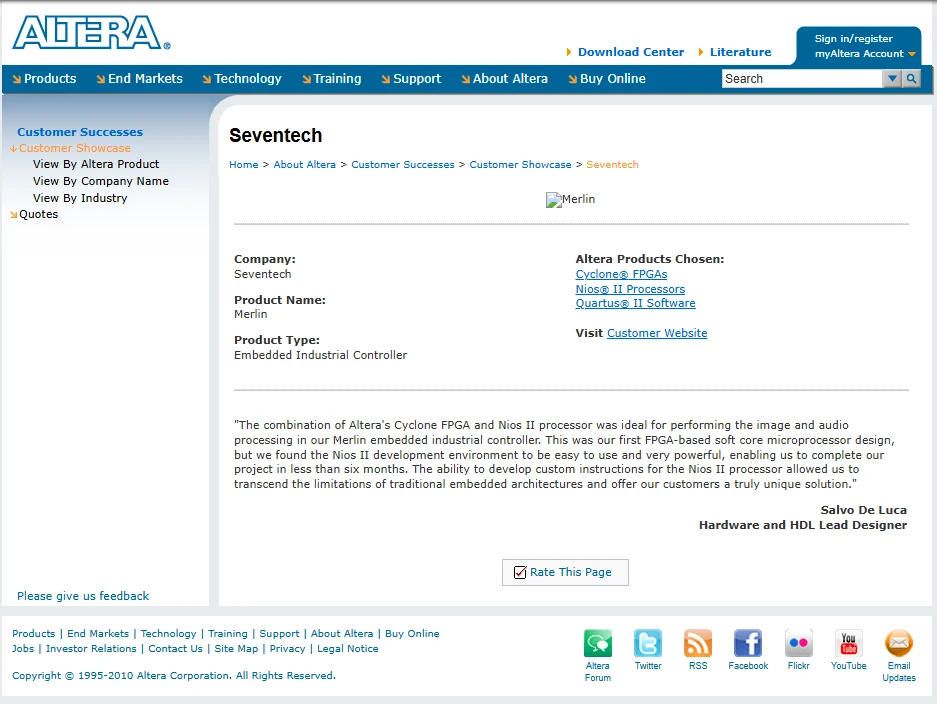
The project made enough of an impression to be featured by Altera (today Intel) in their Customer Showcase, with the founder credited as Hardware and HDL Lead Designer. The board, then under the Seventech brand, was the first soft-core-processor design.
«The ability to develop custom instructions for the Nios II processor allowed us to transcend the limitations of traditional embedded architectures and offer our customers a truly unique solution.»Salvo De Luca, Hardware and HDL Lead Designer · from Altera's Customer Showcase
Just the APIs. The board did the rest.
The user application simply had to interface with the platform's APIs: the game parameters set by the regulator (payout percentage, game duration and cost), the end-of-game signal, coin load and unload, maintenance interventions.
Porting old applications was simplified too: you just cleaned the code of the game-accounting logic and replaced it with calls to the new APIs. The hard, regulated part was already solved.
The complexity, hardware and regulatory, handled by the platform. The developer was left with just the game.
Graphics made easy, even on embedded.
The Merlino shipped with a C++ library of classes and modules that made simple what, at the time and on an embedded system no less, was anything but: video graphics and animation. It took just four steps.
- Background. Load and display a 1024×768 background image.
- Text and logo. Overlay text or a logo on the background.
- Animation. Animate a graphic object and compose it onto the scene.
- Alpha blending. Add transparency to blend the elements: an effect hard to achieve on hardware of that class.
Designed where a mistake is costly.
- ProcessingFPGA with a softcore processor: configurable logic and CPU on the same device.
- Data securityIntegrated smart-card reader (here in the dedicated add-on version) and a battery-backed RTC.
- ConnectivityEthernet and serial ports for dialogue with the remote system and peripherals.
- IntegrationJAMMA edge connector for direct fitting into the gaming cabinet.
It is the same embedded expertise, born where a mistake has real consequences, that we bring today into SaaS, AI integrations and digital products.
FRAM: as fast as RAM, but it never forgets.
For critical data the Merlino used FRAM (ferroelectric RAM), innovative at the time: as fast to read and write as SRAM, yet non-volatile even with the power off. System parameters and application state were saved to FRAM and restored intact on restart, solving reset and boot problems at the root.
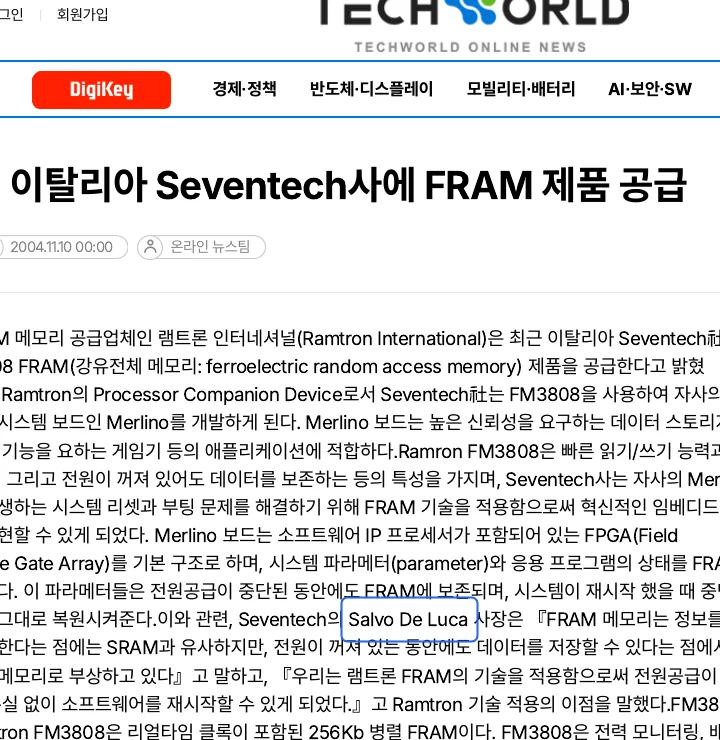
The choice made the trade press: in 2004, Ramtron International announced the supply of its FM3808 FRAM to Seventech for the Merlino Board, and the news was picked up by the Korean outlet Techworld, with a statement from the founder.
From the lab bench to international trade shows.
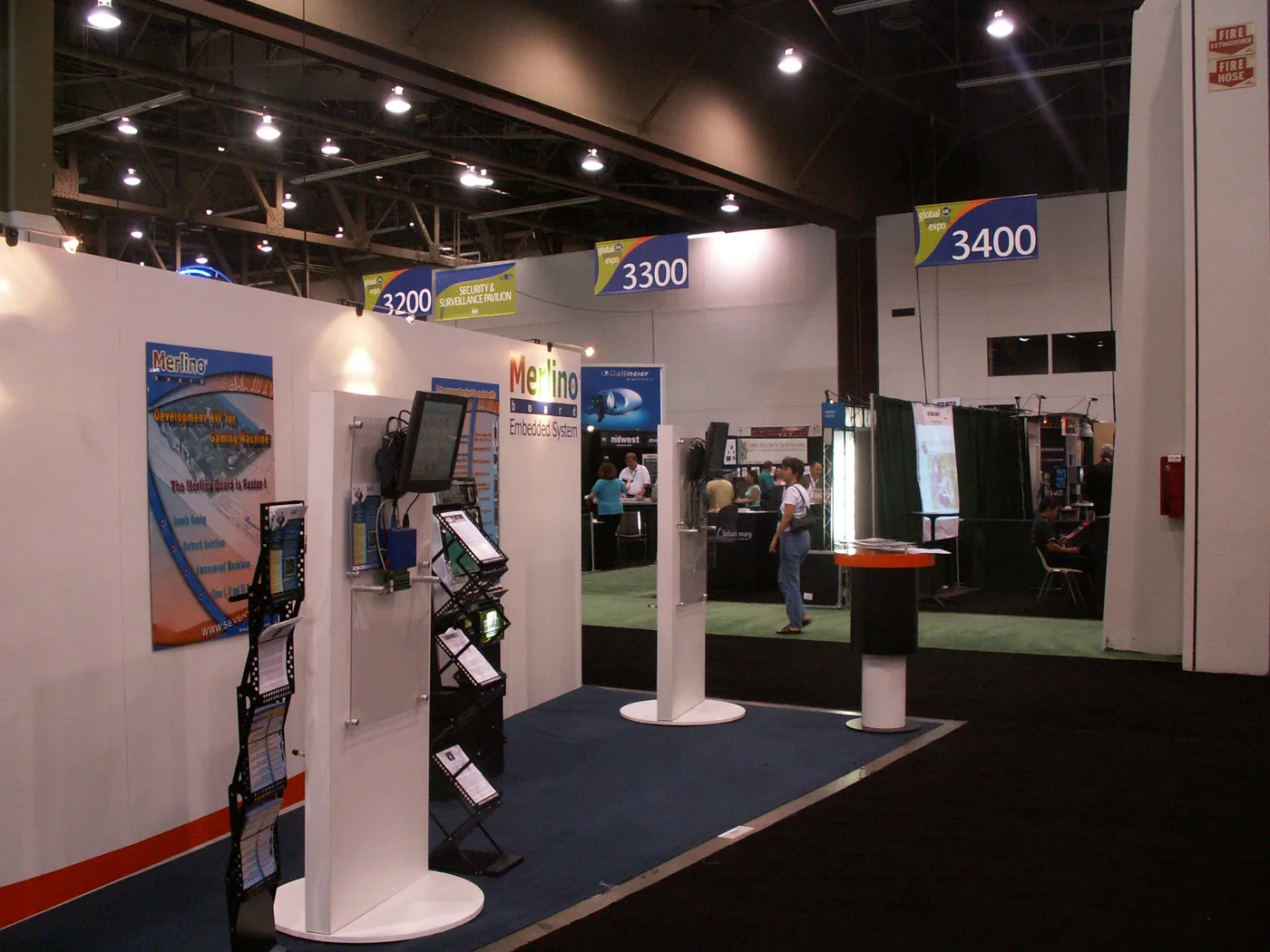
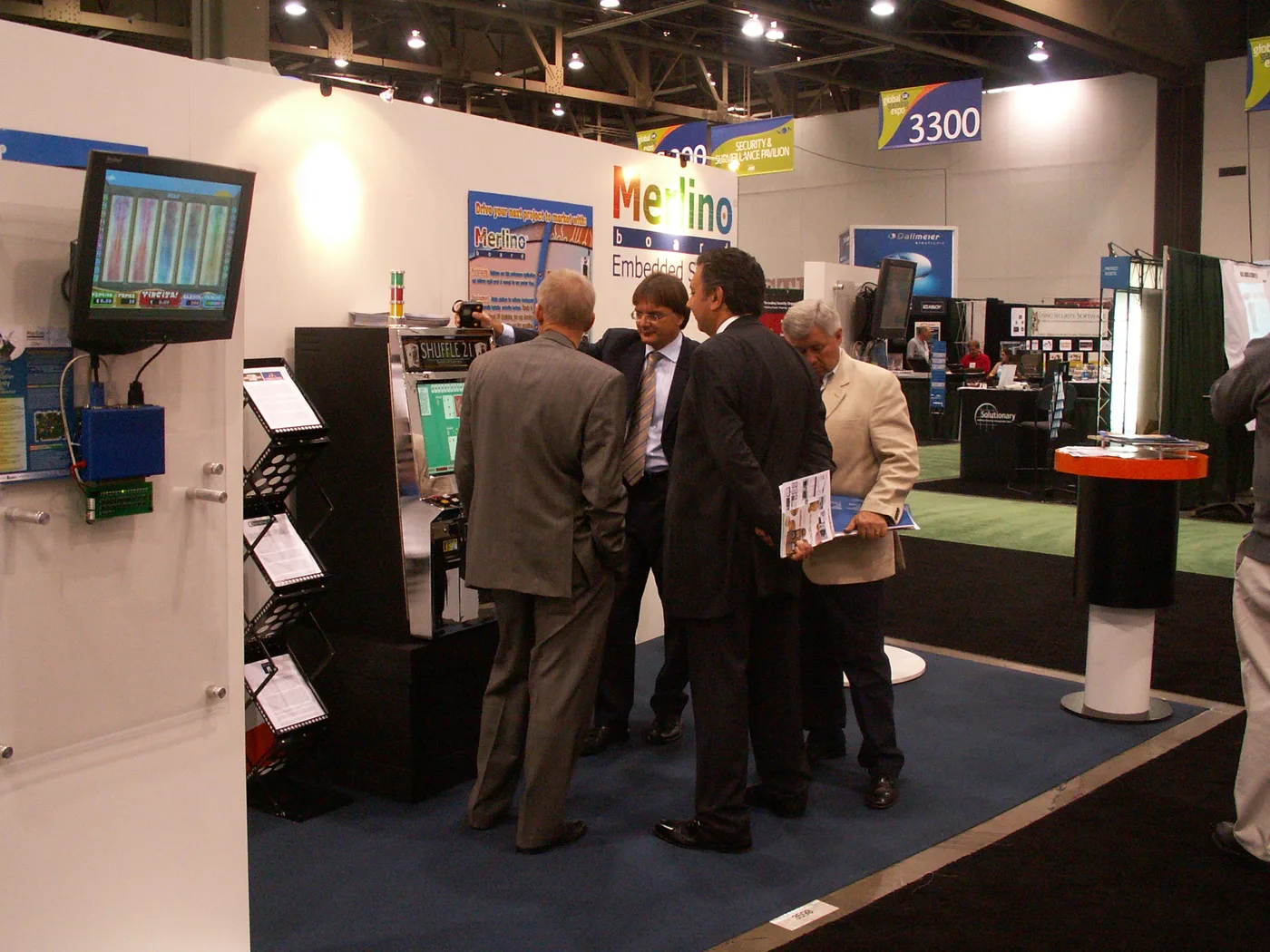
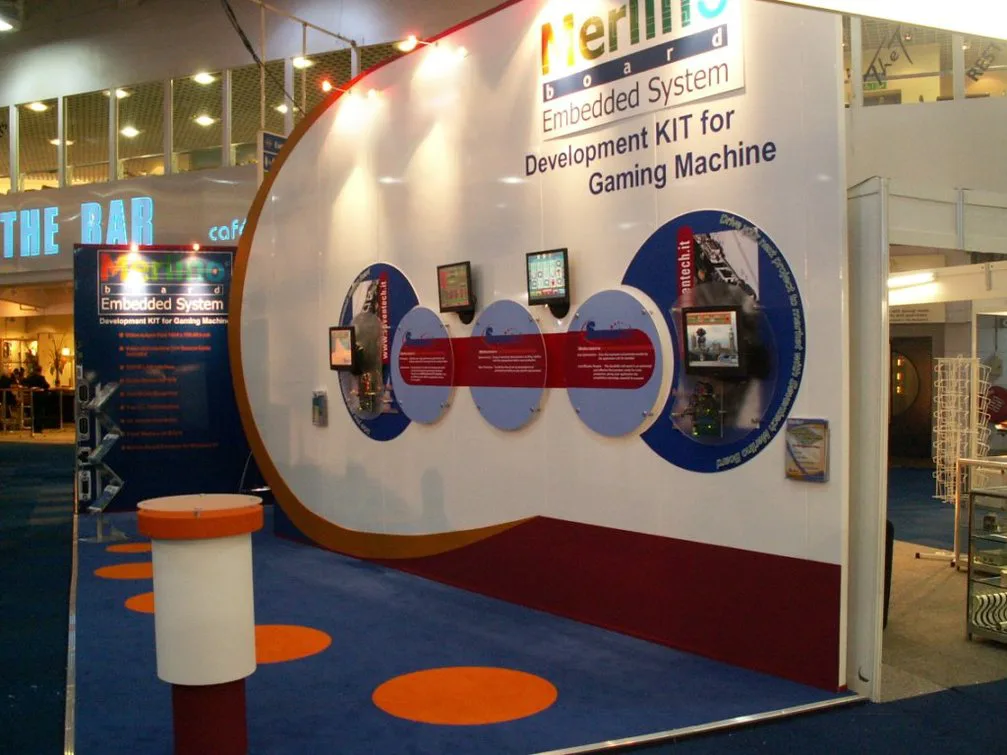
The Merlino Board, under the Seventech brand, was presented at the leading industry shows: from the Global Gaming Expo in Las Vegas to Earl's Court in London.
Hardware, firmware, compliant systems.
If you have an embedded project, even in a regulated domain, it's exactly the kind of problem we like to solve.